1
/
of
1
Wiley
Wiley Companions to the Ancient World
Wiley Companions to the Ancient World
Regular price
$97.16 AUD
Regular price
$107.95 AUD
Sale price
$97.16 AUD
Quantity
Couldn't load pickup availability
Dispatch and delivery
Dispatch and delivery
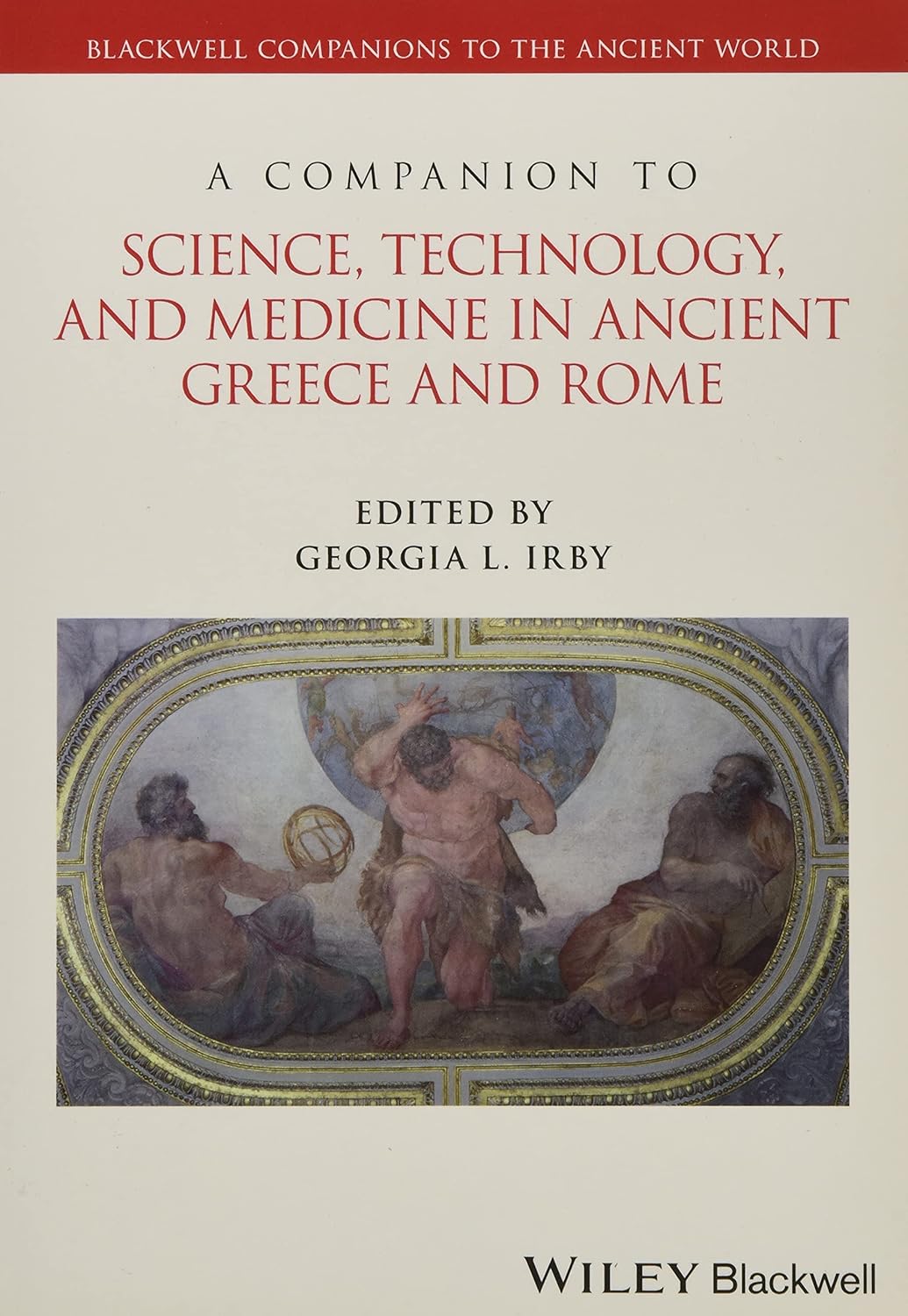
A Companion to Science, Technology, and Medicine in Ancient Greece and Rome brings a fresh perspective to the study of these disciplines in the ancient world, with 60 chapters examining these topics from a variety of critical and technical perspectives.
- Brings a fresh perspective to the study of science, technology, and medicine in the ancient world, with 60 chapters examining these topics from a variety of critical and technical perspectives
- Begins coverage in 600 BCE and includes sections on the later Roman Empire and beyond, featuring discussion of the transmission and reception of these ideas into the Renaissance
- Investigates key disciplines, concepts, and movements in ancient science, technology, and medicine within the historical, cultural, and philosophical contexts of Greek and Roman society
- Organizes its content in two halves: the first focuses on mathematical and natural sciences; the second focuses on cultural applications and interdisciplinary themes
2 Volumes
Authors: Georgia L. Irby
Format: Paperback
Pages: 1104
ISBN-13: 9781119100706
Publication date: 20191115
Share