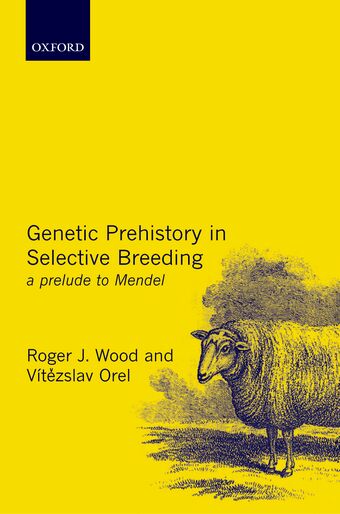
Roger Wood
Genetic Prehistory in Selective Breeding
Genetic Prehistory in Selective Breeding
Couldn't load pickup availability
Dispatch and delivery
Dispatch and delivery
Printed after you order and usually delivered within 2–4 weeks. Once printing has commenced, your order may not be cancelled.
Before Mendel, who came closest to the truth about heredity? This book examines the activities of sheep breeders able to transform the appearance and qualities of their stock by combining different traits of body or wool into new patterns. Exploiting what were then untried procedures - individual trait selection, very close inbreeding and progeny testing - they demonstrated inheritance from both sexes and showed how it could be stabilised. Major advances in breeding are associated with the English farmer Robert Bakewell (1725-1795). By the following century, when the same procedures had been established at breeding centres in central Europe, theory as well as practice became the subject of wider attention. In the Brno Sheep Breeders' Society, discussions of patterns of heredity finally gave way to the physiological question, 'What is inherited and how?' The question was posed by Cyrill Napp, abbot of the monastery to which Mendel was admitted six years later.
Share