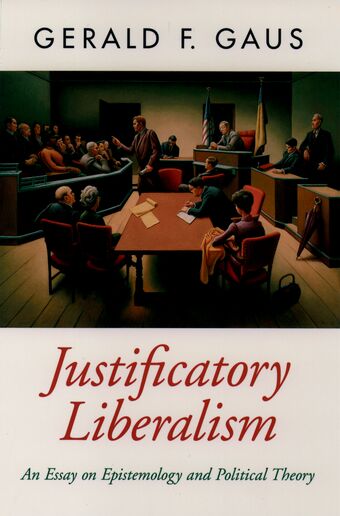
Gerald F. Gaus
Justificatory Liberalism
Justificatory Liberalism
Couldn't load pickup availability
Dispatch and delivery
Dispatch and delivery
Printed after you order and usually delivered within 2–4 weeks. Once printing has commenced, your order may not be cancelled.
Gerald Gaus draws on current work in epistemology and cognitive psychology to defend a modest version of cognitive relativism. Building on this theory of personal justification, he asks, "How do we justify moral and political principles to others?" Here, the "populist" proposal put forward by "political liberals"--that the assent of all reasonable citizens must be obtained--is considered and rejected. Because reasonable people often ignore excellent reasons, moral and political principles can be considered conclusively justified, even in the face of some reasonable dissent. Conclusive justification, however, is difficult to achieve, and Gaus acknowledges that most of our public justifications are inconclusive. He then addresses the question of how citizens can adjudicate their inconclusive public justifications. The rule of law, liberal democracy and limited judicial review are defended as elements of a publicly justified umpiring procedure.
Share