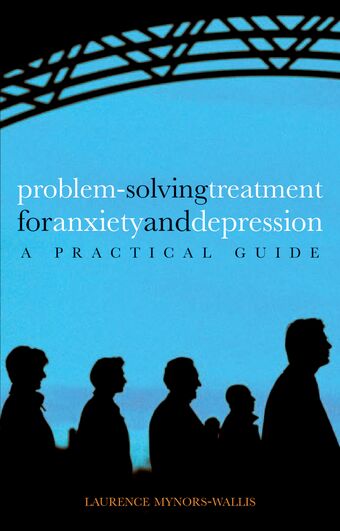
Laurence Mynors-Wallis
Problem Solving Treatment for Anxiety and Depression
Problem Solving Treatment for Anxiety and Depression
Couldn't load pickup availability
Dispatch and delivery
Dispatch and delivery
Printed after you order and usually delivered within 2–4 weeks. Once printing has commenced, your order may not be cancelled.
Problem-solving treatment is a well researched, practical psychological intervention. The treatment is very much a here and now treatment, focusing on current difficulties and setting future goals. It does not dwell on past relationships and past mistakes. Patients are helped to gain a sense of mastery over their difficulties. There is good evidence to support the use of problem-solving in treatment of patients with depression, emotional disorders, and after episodes of deliberate self-harm. Problem-solving has been developed as a brief, feasible, psychological treatment that can be delivered by non-specialists. Much of the evidence supporting the use of problem-solving treatment has been undertaken in primary care. This definitive guide provides a 'hands-on' manual to assist potential therapists in understanding the background and rationale for problem-solving. The first chapter of the book provides a brief description of the theory which lead to the development of problem-solving treatment. The research trials underpinning the effectiveness of treatment are discussed in chapter two. Chapters three to seven provide a detailed manual for potential therapists. The structure of problem-solving is set out supported by many relevant clinical examples. Detailed advice is given as to how to structure a course of problem-solving. Case examples of how problem-solving develops over a course of treatment are set out. Advice for would-be practitioners as to how best to deliver problem-solving and also guidance as to potential pitfalls are given. Chapter eight sets out the content of a two day course suitable for teaching problem-solving.
Share