Loren Goldman
The Principle of Political Hope Progress
The Principle of Political Hope Progress
Couldn't load pickup availability
Dispatch and delivery
Dispatch and delivery
Printed after you order and usually delivered within 2–4 weeks. Once printing has commenced, your order may not be cancelled.
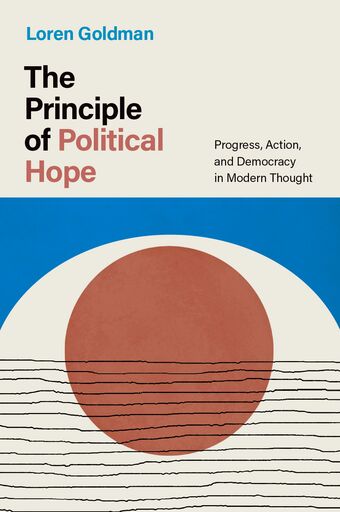
A few years ago, the rhetoric of hope was all the rage, but the faith it expressed has been challenged by recent events and in recent political theory. Despite the regular appeal to hope from politicians, there is a widespread feeling of despair in the modern world: democracy is in retreat, it seems, and authoritarianism threatens both domestically and internationally. As a precondition for political action, the decline of political hope has special urgency in the context of democracy, an idea based on the egalitarian faith in the capacities of ordinary people to collectively manage their common affairs. What, if anything, can offer a foundation for hope in a democratic age? In The Principle of Political Hope, Loren Goldman draws on Immanuel Kant, Ernst Bloch, Charles Peirce, William James, and John Dewey to offer an account of political hope as a frame for navigating the relationship between subjective aspiration and objective possibility. Considering what political hope is, how it operates, how it has been thought about, and how to think about it in the contemporary world, Goldman's conceptualization of hope rejects grand notions of progress while still maintaining the possibility of a brighter future. This hope, as opposed to optimism, is characterized by uncertainty, haunted by the possibility of failure, and works to overcome despair. It is rooted in political action and democratic experimentation. Through an insightful reading of each thinker, Goldman shows that the anticipatory aspect of political thought allows us to make sense of political acts as prefigurative instead of merely expressive. Participation in voting, electoral politics, protest, aesthetic happenings, and even everyday minor acts of illegality are not merely activities serving instrumental ends-in-view but fleeting enactments of and preparation for a better future. Refreshing and lucid, Goldman reconstructs hope as a necessary condition for social and political engagement, reinvigorating the possibility of utopia in the process.
Share