Uri Erman
Voicing Britannia Opera, Gender, and Jews, 1760-1830
Voicing Britannia Opera, Gender, and Jews, 1760-1830
Couldn't load pickup availability
Dispatch and delivery
Dispatch and delivery
Printed after you order and usually delivered within 2–4 weeks. Once printing has commenced, your order may not be cancelled.
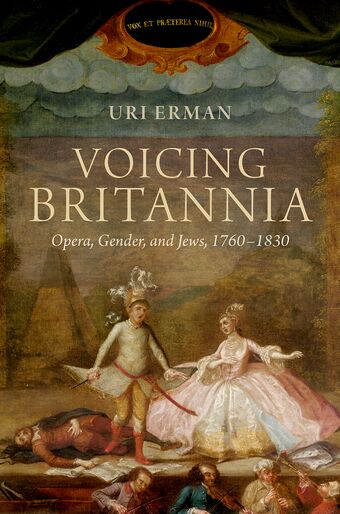
According to a widely held view in eighteenth-century Britain, Britons were somehow inherently unmusical, and this supposed shortcoming was, in fact, a virtue. George Colman explicated this view when he wrote in 1762 that "for arts and arms, a Briton is the thing! John Bull was made to roarDLbut not to sing." However, he was responding to an already changing cultural landscape. The 1760s saw the emergence of English-language opera, and the rise of a new generation of British singers ready and able to perform it. In response to long-held suspicions toward Italian opera and its singers, this turn was a bold attempt to offer British audiences a new vision of themselves: as a singing nation. This is the bookâs central theme: the question of whether Britons could sing, and how it was negotiated in public discourse within an evolving cultural landscape. Drawing on a wide variety of primary sources, the text follows three groups of groundbreaking singersDLhigh-pitched men, virtuosic prima donnas, and JewsDLwho sought to shift the landscape of opera in Britain, all the while challenging the prevailing gender norms and social categories. These attempts gave rise to a certain interplayDLbetween an evolving cultural form seeking approval, and an insistent reticence that clung to the conventional. Eventually, the effort to adopt opera as a national vehicle, over a period of several decades, only helped to galvanize a guarded attitude toward musicDLan attitude that Britons were forced to admit was constitutive of their national identity.
Share